Brooklyn, New York · 1907 – 1990

Barbara Stanwyck

The toughest woman in Hollywood — orphaned at four, chorus girl at thirteen, film star at twenty-two. She could do comedy, noir, melodrama, and Western with equal command, and she never once asked anyone's permission.

4
Oscar
Nominations
1
Honorary
Oscar
85+
Film
Credits
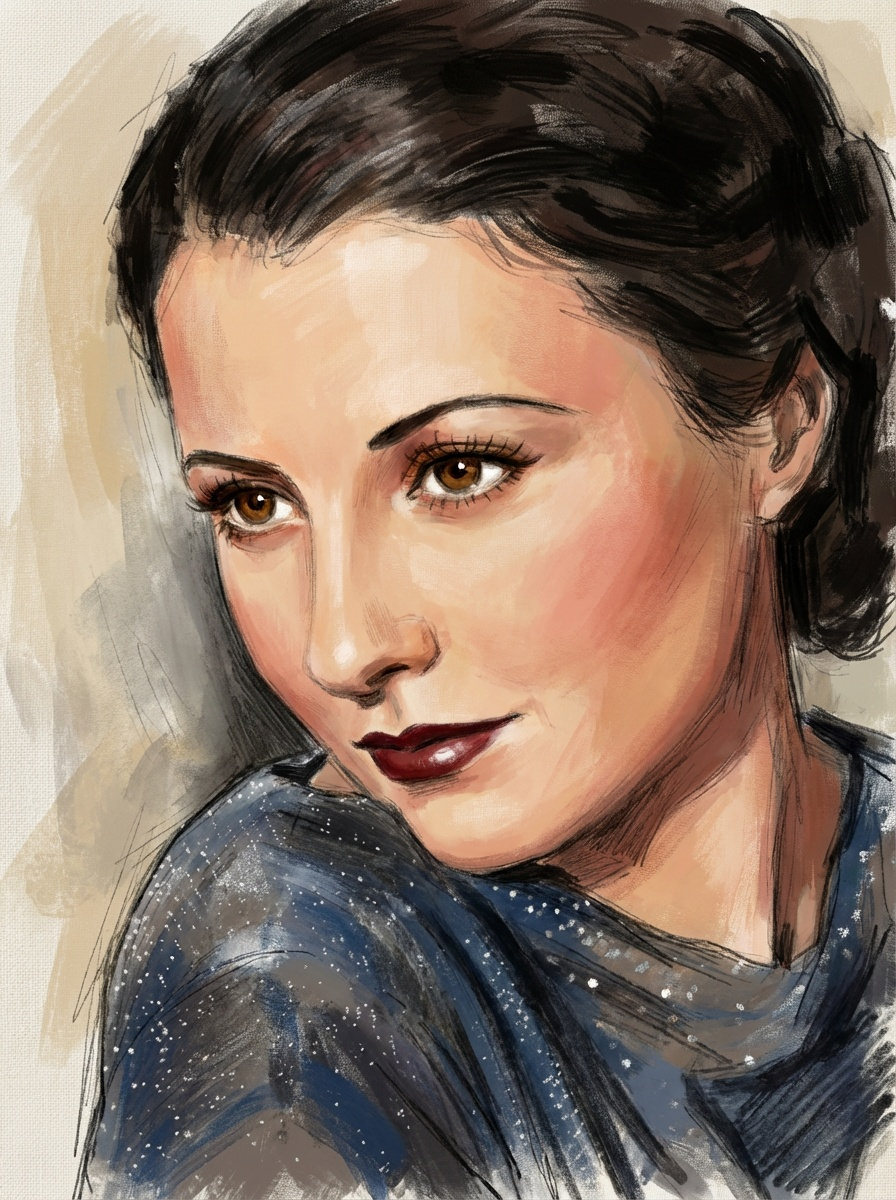
Barbara Stanwyck — painted portrait Portrait · Barbara Stanwyck

From the Brooklyn Orphanage to Phyllis Dietrichson

Born Ruby Catherine Stevens on July 16, 1907, in Brooklyn, New York — her mother died when she was four, her father abandoned the family shortly after, and she was raised in a series of foster homes and boarding houses while her older sister performed in vaudeville. By thirteen she was working in the chorus herself. By sixteen she was dancing in speakeasies. She renamed herself after a Broadway playbill — Barbara Frietchie and Stanwyck's Bar — and got to work.

Frank Capra directed her in Ladies of Leisure (1930) and immediately saw something that couldn't be manufactured: an emotional directness that bypassed the gap between performance and reality. She cried on cue from take one, never needed two, and never appeared to be acting. Capra called her the best actress he ever worked with.

Her apex came in 1944 with Billy Wilder's Double Indemnity — her Phyllis Dietrichson, the wig-wearing femme fatale who manipulates Fred MacMurray into murdering her husband, remains the definitive noir performance by any actress. She earned her fourth Oscar nomination and didn't win. She never won competitively. The Academy gave her an Honorary Oscar in 1982 and the audience gave her a standing ovation that lasted long enough to be awkward.

She transitioned seamlessly to television in the 1960s, winning three Emmy Awards for The Barbara Stanwyck Show and later The Big Valley, where she played Victoria Barkley — a matriarch so formidable the show ran four seasons on the force of her presence alone.
1907
Born Ruby Stevens, Brooklyn, New York
1927
Broadway debut in The Noose; renamed Barbara Stanwyck
1930
Film breakthrough — Ladies of Leisure with Capra
1941
Oscar nom — Ball of Fire; screwball peak with Gary Cooper
1944
Double Indemnity — Phyllis Dietrichson; definitive noir
1960s
Three Emmy Awards; The Big Valley on television
1982
Honorary Academy Award — standing ovation

From Double Indemnity to Stella Dallas

1944Noir · Thriller
Double Indemnity
Billy Wilder's definitive film noir — Stanwyck as Phyllis Dietrichson, the calculating housewife in the ankle bracelet and blonde wig who seduces an insurance salesman into murdering her husband. The performance that redefined screen villainy.
Oscar Nom

Phyllis Dietrichson is not sympathetic and Stanwyck plays her that way — cold, precise, using warmth as a tool. The genius is that you watch her manipulations knowing exactly what they are and remain magnetised anyway. The ankle bracelet descending the stairs is cinema's most efficient femme fatale introduction.

1937Drama · Melodrama
Stella Dallas
King Vidor's working-class melodrama — Stanwyck as Stella, the brash, socially ambitious mother who ultimately sacrifices her daughter's happiness to her own love. Her third Oscar nomination and her most emotionally devastating performance.
Oscar Nom

The final scene — Stella in the rain outside the window watching her daughter's wedding — is one of Hollywood's great moments of self-abnegating love. Stanwyck makes Stella impossible to condescend to even as the film asks you to pity her. She is too alive for pity.

1941Screwball Comedy
The Lady Eve
Preston Sturges' perfect screwball comedy — Stanwyck as Jean Harrington, a card-sharp who falls genuinely in love with the mark she's supposed to fleece, then reinvents herself as the Lady Eve to exact comic revenge.

Stanwyck's comic timing is as exact as her dramatic instincts are true — she manipulates Henry Fonda's hapless Charles Pike with the same cool pleasure she brings to Phyllis Dietrichson's murders, except here it's funny. The leg scene is the finest seduction in screwball comedy.

1948Noir · Western
Sorry, Wrong Number
Anatole Litvak's single-location thriller — Stanwyck as a bedridden heiress who accidentally overhears her own murder being planned. Her fourth Oscar nomination, for a performance of sustained, escalating terror.
Oscar Nom

The entire film takes place in a bedroom, on a telephone — Stanwyck holds it together by sheer force of physical and emotional commitment. Her panic accumulates in layers, each one more credible than the last. A technical masterclass in making a static situation feel like a runaway train.

1941Screwball Comedy · Farce
Ball of Fire
Howard Hawks' riff on Snow White — Stanwyck as Sugarpuss O'Shea, a nightclub singer who hides from the mob in an apartment full of encyclopedia-writing professors. She earned her second Oscar nomination for pure comic brilliance.
Oscar Nom

Her Sugarpuss is all speed and carnality and wit — she runs circles around eight distinguished character actors and Gary Cooper, and she does it with the ease of someone for whom difficulty is just another word for Tuesday. The best screwball performance of any actress not named Katharine Hepburn.

"

My only problem is finding a way to play my fortieth fallen female in a different way from my thirty-ninth.

— Barbara Stanwyck

Four Nominations, One Ovation, and History's Verdict

Academy Awards — 4 Nominations
1938 · 1942 · 1945 · 1949
Stella Dallas · Ball of Fire · Double Indemnity · Sorry Wrong Number
Never won competitively — the Academy's most discussed oversight
4 Nominations
Honorary Academy Award
1982
Career Achievement
For her unique contribution to the art of screen acting — standing ovation from peers
Honorary Oscar
Emmy Awards
1961 · 1966
Television Excellence
Emmy for The Barbara Stanwyck Show and The Big Valley — conquered the new medium
Emmy Won
AFI Lifetime Achievement
1999
11th Greatest Female Legend
American Film Institute ranked her among the greatest screen legends of all time
AFI Legend

Toughness as a Form of Tenderness

Emotional Truth
Every director who worked with Stanwyck remarked on the same thing: she never appeared to be acting. The emotion was always there from take one, and it was always the right emotion. This was not intuition — it was the product of an iron professionalism rooted in survival.
Genre Mastery
Noir, screwball comedy, melodrama, Western, soap opera — Stanwyck moved between genres without effort and without condescension. She brought the same seriousness to a Preston Sturges farce as to a Wilder noir, which is why both work.
The Self-Made Woman
Her biography — orphan, chorus girl, star — mapped directly onto the roles she played best. The women who wanted more than they were supposed to want, who used every tool available, who refused to be pitied, were women she understood from the inside.
The Long Career
She worked in films from 1927 to 1964 and on television through 1985 — nearly six decades of sustained professional excellence. She was the first major star to embrace television as an equal medium, and she conquered it as thoroughly as she had the screen.

The Woman Who Was Always Ready

Barbara Stanwyck is the great undervalued actor of Hollywood's Golden Age — undervalued not by her peers, who unanimously considered her the best, but by the Academy, which nominated her four times and never gave her the award. The Honorary Oscar in 1982, and the standing ovation that accompanied it, was the profession finally saying in public what it had always said in private.

Her range was genuinely extraordinary. The woman who played Phyllis Dietrichson also played Sugarpuss O'Shea — the femme fatale and the comedienne, separated by three years, both executed with total command. She is the only Hollywood actress of her era whose work in comedy is as remarkable as her work in drama, and vice versa. That double excellence is her singular distinction.

Oscar Nominations
Never won — the Academy's lasting shame
4
Emmy Awards
Conquered television as thoroughly as film
3
Film Credits
Features from 1927 to 1964
85+
Career Span
Broadway debut to final TV role
58yr