Cadiz, Ohio · 1901 – 1960

Clark Gable

The King of Hollywood — voted by fellow actors, awarded by audiences, confirmed by history. The man who made the American male seem like something worth aspiring to: easy in his own skin, casually devastating, entirely without pretension.

1
Academy Award
Won
3
Oscar
Nominations
60+
Film
Credits
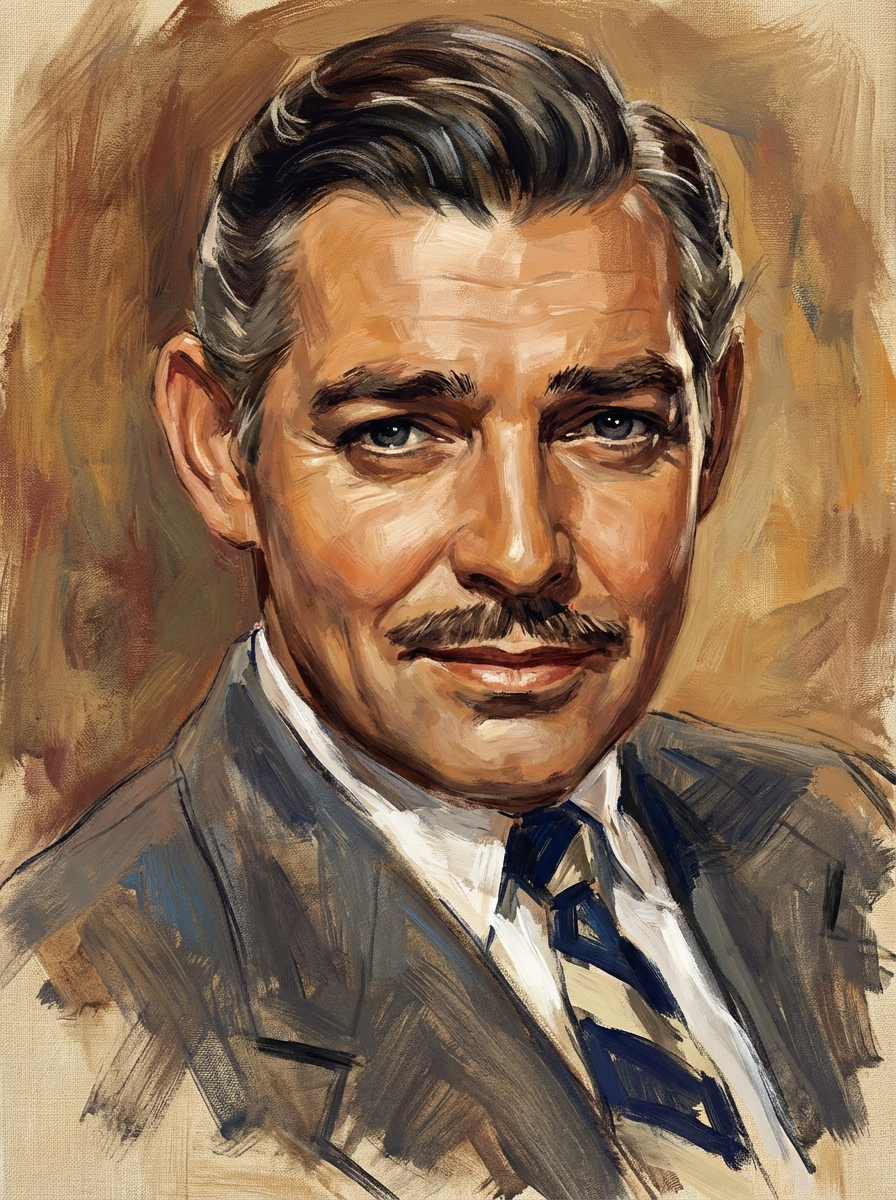
Clark Gable — painted portrait Portrait · Clark Gable

The Ohio Oil Worker Who Became the King

Born William Clark Gable on February 1, 1901, in Cadiz, Ohio, the son of an oil-field worker — his mother died when he was seven months old and he was raised largely by his father and stepmother, moving between Ohio and Oklahoma as work dictated. He tried lumberjacking, oil drilling, and door-to-door sales before discovering theatre at seventeen in Akron, Ohio. He was thirty years old before he made his first significant film.

MGM signed him in 1930 and within three years he was the studio's most valuable asset. His particular combination of qualities — the physical authority of a working man, the grin that disarmed every room, an ease in his own skin that no amount of studio coaching could have manufactured — created a new template for the American leading man. He was voted King of Hollywood by the industry itself in 1937 and held the title without dispute for twenty years.

The Oscar came for It Happened One Night (1934) — Frank Capra's road-trip comedy opposite Claudette Colbert, the film that swept all five major Academy Awards. Gable's Peter Warne was the role that showed what he could do with lightness and charm: not performance but inhabitation. The undershirt scene — in which he removes his shirt to reveal a bare chest, reportedly causing undershirt sales to plummet nationally — was pure, accidental cinema.

His Rhett Butler in Gone with the Wind (1939) was the role the world expected him to play, and he played it with a mixture of reluctance and mastery that felt exactly right for a man who knows exactly what he is and refuses to pretend otherwise. He died of a heart attack on November 16, 1960 — seventeen days after completing The Misfits, his final film, opposite Marilyn Monroe.
1901
Born in Cadiz, Ohio; oil-driller's son
1930
MGM contract; Hollywood career begins at 29
1934
Oscar won — It Happened One Night; swept all five Oscars
1937
Voted King of Hollywood by fellow players
1939
Rhett Butler — Gone with the Wind; Oscar nomination
1942–44
WWII service — combat missions as B-17 gunner
1960
The Misfits completed; dies 17 days later, age 59

From It Happened One Night to The Misfits

1934Screwball Comedy · Romance
It Happened One Night
Frank Capra's road-trip comedy — Gable as Peter Warne, the unemployed reporter who escorts a runaway heiress across Depression-era America. The film that swept all five major Oscars and made screwball comedy the dominant genre of the decade.
Oscar Win

Gable's Peter Warne is his finest performance because it is his least performed — the ease is total, the charm unstudied, the romantic authority entirely natural. He invented the masculine half of the screwball comedy dynamic that Hollywood spent the next twenty years trying to replicate. The Walls of Jericho sequence is one of cinema's great slow burns.

1939Epic · Drama · Romance
Gone with the Wind
Victor Fleming's monumental Civil War epic — Gable as Rhett Butler, the rakish blockade runner who loves Scarlett O'Hara more honestly than she deserves. The role the entire country expected him to play; he played it with magnificent reluctance.
Oscar Nom

Gable didn't want the role — he thought he'd fail the audience's expectations — and that anxiety produced something authentic: Rhett's mixture of desire and disdain mirrors the actor's own feelings about the assignment. "Frankly, my dear, I don't give a damn" is the most famous exit line in cinema, delivered with the precision of a man who has been waiting to say it for four hours.

1935Adventure · Drama
Mutiny on the Bounty
Frank Lloyd's sea-voyage epic — Gable as Fletcher Christian, the first officer who leads the mutiny against Charles Laughton's Captain Bligh. An Oscar-nominated performance of physical authority and moral clarity that was perfectly suited to his strengths.
Oscar Nom

Christian's mutiny is justified in the film, and Gable plays it as a man who has been pushed past a line he didn't know existed and discovers, on the far side of it, a cleaner version of himself. The showdown with Laughton on deck is one of classic Hollywood's great confrontations between physical authority and institutional cruelty.

1960Drama · Western · Farewell
The Misfits
John Huston's elegiac Arthur Miller film — Gable as Gay Langland, an aging Nevada cowboy clinging to a way of life that has already ended, alongside Marilyn Monroe, Montgomery Clift, and Eli Wallach. His final performance, completed seventeen days before his death.

Gable did his own stunt work throughout the film — including being dragged by a wild mustang — in temperatures exceeding 100 degrees, refusing to use a double. He said it was the best work he'd ever done. Gay Langland's stubborn dignity in the face of obsolescence is the most searching performance of his career, and it was the last thing he gave us.

"

The only reason they call me the King is because they haven't found a better word for what I am.

— Clark Gable

The King's Crown

Academy Award — Best Actor
1935
It Happened One Night
One of only three films to sweep all five major Academy Awards
Oscar Won
Academy Award — Nominations
1935 · 1936 · 1940
It Happened · Mutiny · Gone with the Wind
Three nominations across the decade that defined his stardom
3 Nominations
King of Hollywood
1937
Industry Vote
Voted King of Hollywood by peers in an industry poll — held the title uncontested for over two decades
The King
WWII Service
1942–1944
Air Medal · Distinguished Flying Cross
Flew five combat missions over Europe as a B-17 gunner — decorated for actual service
Distinguished Flying Cross

Ease as the Highest Difficulty

Natural Authority
Gable's authority on screen came from biography, not training. The oil fields, the lumberyards, the door-to-door sales routes — he arrived in Hollywood having already been in the world, and the world was written in how he moved through a room.
Comic Timing
The Oscar was for a comedy, and it was deserved for comedic reasons — Gable's Peter Warne has a timing that looks like instinct and is actually the product of a performer who understood that the pause is the joke, not the line that follows.
The King Title
He neither sought the title nor particularly enjoyed it — he felt it raised expectations he'd eventually fail to meet. That ambivalence gave his performances a useful quality: a man who knows exactly what people want from him and provides it with just enough irony to be interesting.
The Final Act
The Misfits, made at fifty-nine against medical advice, with stunt work that likely shortened his life, showed that the ease was always backed by something harder. He didn't coast. He chose to go out working, and the choice tells you more about him than any studio profile.

The Template That Still Hasn't Been Improved Upon

Clark Gable is the origin of a type that American cinema has been trying to recreate ever since — the man who is physically formidable and emotionally available, who commands a room without needing it to know he's doing so, who can be funny without sacrificing his authority and authoritative without sacrificing his warmth. No one has fully managed it since.

His final image is the right one: an aging cowboy in the Nevada desert, being dragged by a wild horse, doing his own stunt work at fifty-nine, refusing to acknowledge that the world he knew had already ended. That stubbornness — graceful, futile, entirely characteristic — is the most honest thing he ever put on film, and it was the last thing he did.

Academy Award
It Happened One Night, 1935
1
Oscar Nominations
Three across the defining decade
3
Years as The King
Voted 1937; held uncontested
20+
AFI Greatest Male Legend
Ranked seventh all time
#7