The grin that broke Hollywood open. For sixty years, an actor of volcanic charisma and bottomless menace — equally at home in Roman Polanski's sunlit noir and Stanley Kubrick's haunted hotel, in courtroom drama and comic-book carnival.
Portrait · Jack Nicholson
Born April 22, 1937, in Neptune City, New Jersey, John Joseph Nicholson grew up believing his grandmother was his mother and his mother was his sister — a secret kept from him until after both women's deaths. This foundational instability, some argue, feeds the charged quality of his best performances: a man who suspects the world is hiding something.
He arrived in Hollywood in 1957, initially as an office worker at MGM's cartoon department, and spent a decade in low-budget Roger Corman pictures before Easy Rider (1969) made him a countercultural icon. His BFCA-nominated turn as alcoholic lawyer George Hanson — loose, funny, tragic — announced a new kind of American screen charisma.
His partnership with Roman Polanski on Chinatown (1974) produced one of the decade's finest films, and One Flew Over the Cuckoo's Nest (1975) won him his first Oscar and made him the defining male face of Hollywood's New Wave. He went on to accumulate twelve Academy Award nominations — more than any other male actor.
His later career encompassed The Shining, Terms of Endearment, Batman, A Few Good Men, and his second and third Oscars for Terms of Endearment and As Good as It Gets. He has been, for six decades, perhaps the most immediately recognizable screen presence in American cinema.
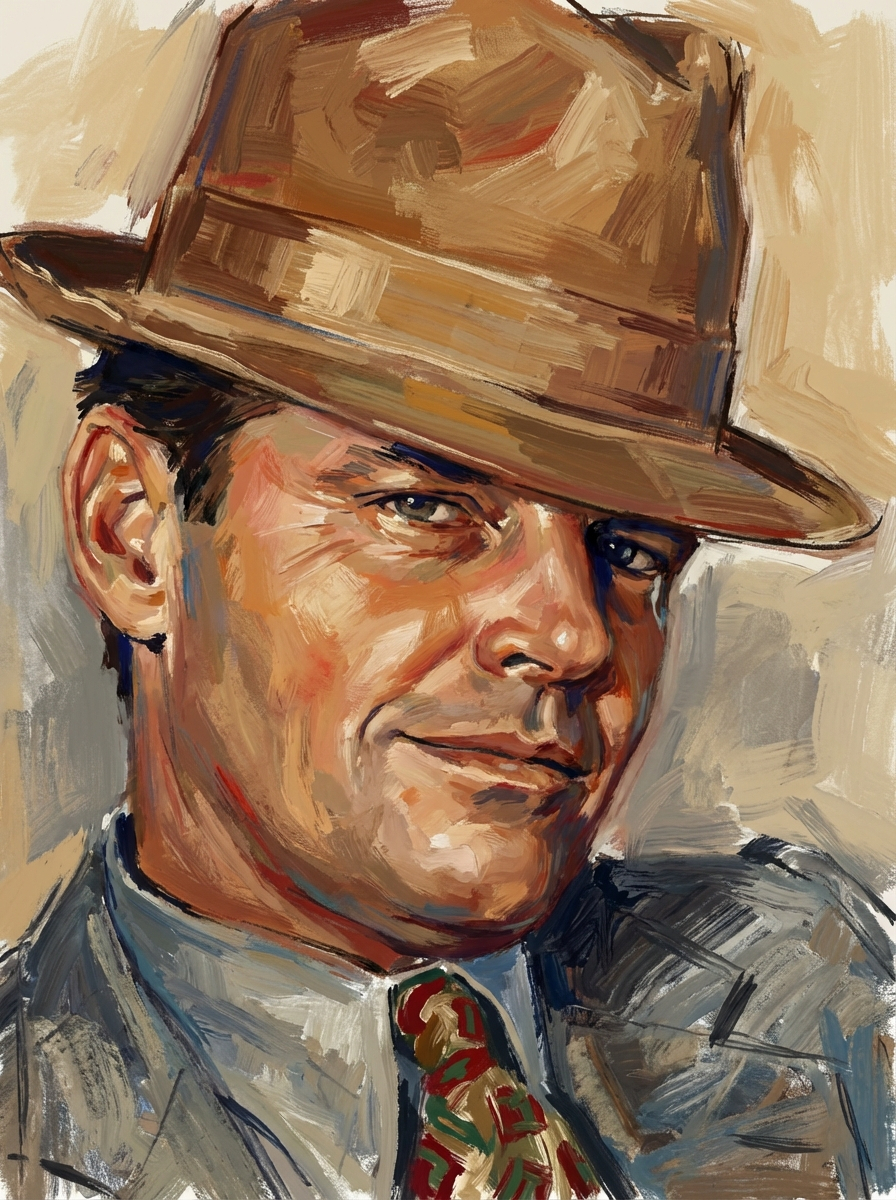
Robert Towne's script is the most celebrated of its decade. Polanski's direction is austere and precise. And Nicholson's Gittes — tanned, wisecracking, slowly breaking apart — is one of cinema's most complete portraits of a man destroyed by idealism meeting reality. The ending remains among the most devastating in American film.
Only the second film in history to win the five major Oscars (Picture, Director, Actor, Actress, Screenplay). Nicholson's McMurphy is a force of nature — physical, joyful, defiant — made tragic by the very system he refuses to acknowledge has power over him. His Oscar was the first of three.
Kubrick and Nicholson made something neither fully horror nor fully psychological study — a film about the dissolution of a mind that uses every resource of cinema to put the audience inside the experience. The axe-through-the-door sequence remains one of the most iconic images in film history.
As Garrett Breedlove — ex-astronaut, romantic liability, shambling neighbor — Nicholson delivered a performance of unexpected warmth and comedy. His Supporting Actor Oscar confirmed his ability to find humanity in characters who could easily be written as purely roguish.
His third and final Oscar. Melvin Udall is alternately monstrous and movingly vulnerable — a performance that required complete commitment to a character almost designed to be unlovable, made ultimately irresistible. "You make me want to be a better man."
With my sunglasses on, I'm Jack Nicholson. Without them, I'm fat and sixty.
Jack Nicholson holds the record as the most Oscar-nominated male actor in Academy history, with twelve nominations across six decades. He won three times — in each of the Academy's major acting categories (Lead Actor, Supporting Actor, Lead Actor again), a distinction no other performer has matched.
The American Film Institute's list of the 100 greatest male screen legends ranks him among the very top. His work across genres — from countercultural drama to horror, from classical neo-noir to romantic comedy — demonstrates a range that defies categorization. He was, for thirty years, simply the most important movie star in the world.