The Brooklyn actress who wrote every role she played, served ten days in jail for obscenity, arrived in Hollywood at thirty-eight, rescued Paramount from bankruptcy, and became one of the highest-paid people in America — by being exactly what the censors spent thirty years trying to prevent her from being.
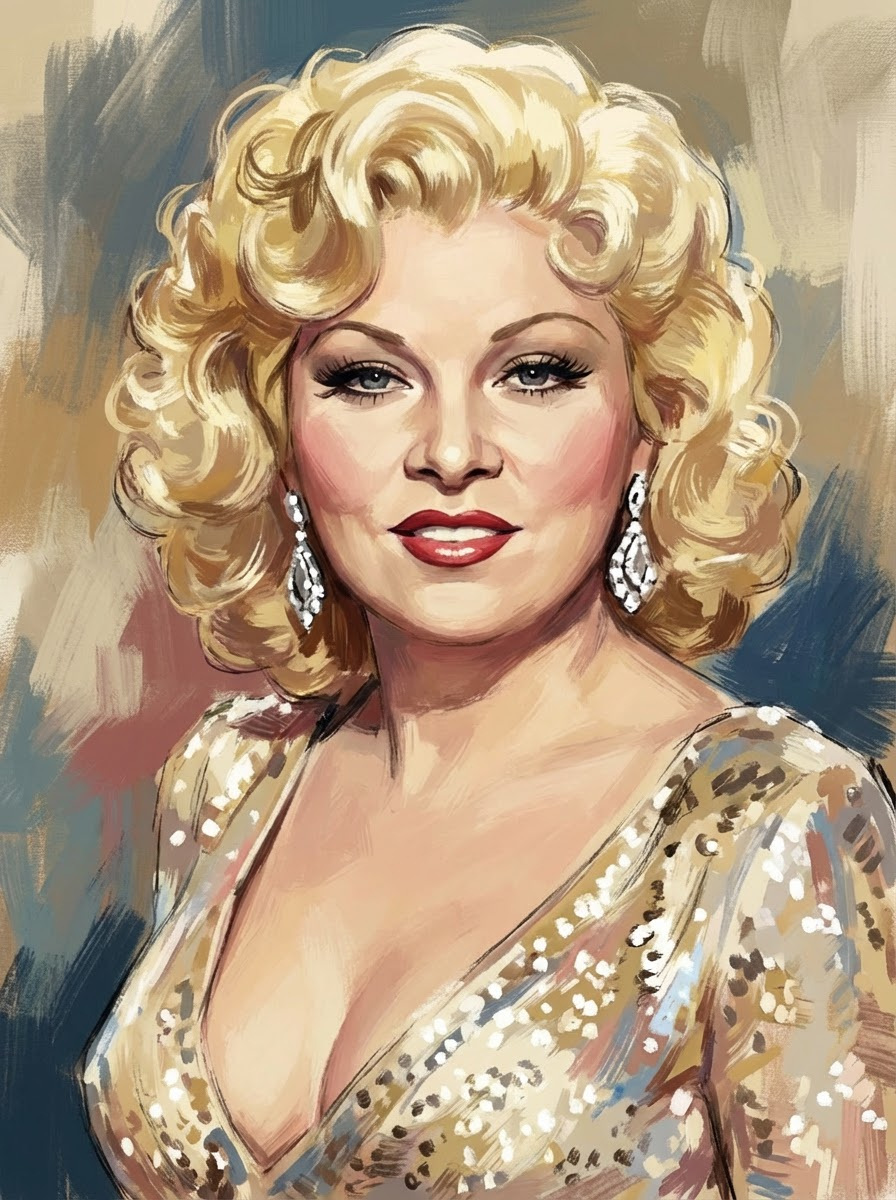
Portrait · Mae WestBorn Mary Jane West on August 17, 1893, in Bushwick, Brooklyn — the daughter of a prizefighter and a corset model. She was on the vaudeville stage at five and a professional performer by fourteen, developing the persona — the walk, the delivery, the wit — that would remain essentially unchanged for the next sixty-five years.
She wrote her own Broadway plays, which was not what actresses of the 1920s did. Sex (1926), which she wrote, produced, directed, and starred in, ran for 375 performances before the police closed it on obscenity charges and she served ten days on Welfare Island, which she used to considerable publicity advantage. Diamond Lil (1928) consolidated her Broadway dominance.
Paramount signed her in 1932, when she was thirty-eight — an age at which the studio system considered actresses finished — and she promptly co-wrote She Done Him Wrong (1933), based on Diamond Lil, which earned an Oscar nomination for Best Picture and saved Paramount from bankruptcy. She was one of the highest-paid people in America by 1935. The Hays Code, substantially tightened in 1934, had been provoked in significant part by her existence.
She continued performing — nightclub acts, Las Vegas, a 1970 film comeback in Myra Breckinridge — until her health declined in her mid-eighties. She died on November 22, 1980, in Los Angeles, having written her own material, managed her own career, and refused every offer of help that came with conditions attached.
The "come up and see me sometime" scene — the invitation to the young Salvation Army officer played by Grant — is the most famous line reading in Mae West's filmography, and the line she did not actually say in quite that form, which has not prevented it from becoming the most imitated. The film's entire economy is West's economy: she enters later, she leaves last, and in between she is the only person in the room the camera or the audience wishes to watch.
Tira's quality — the woman who has encountered every scheme men deploy and has already prepared the counter — is played with the specific warmth that prevents West's wit from becoming contempt. She liked men; the comedy was not at their expense but at the expense of their self-delusion, which is a different and more generous transaction.
The film is the clearest demonstration of West's adaptability: after the Hays Code removed most of the tools she had used in 1933, she found different ones. The comedy was now less explicit and more structural — the gap between what the character appears to be and what she actually is — and the gap was if anything funnier for being less directly stated.
I generally avoid temptation unless I can't resist it.
Mae West's legacy is the walk and the wit — the persona she constructed on the Brooklyn vaudeville stages and refined for sixty years without ever needing anyone else's material. She provoked a federal censorship regime into overhauling itself, saved a major studio from bankruptcy, and became one of the highest-paid people in America at forty, all while writing her own lines.
The Hays Code tried to contain her; she adapted. The radio banned her; she outlasted the ban. The studios scheduled her in inadequate vehicles; she rewrote them. The specific legacy is the model of the performer as the author of her own work — a model so unusual in her era that the institutions could not process it except as a threat, which was itself the most accurate possible description of what she was.