The Lemberg-born actor who disappeared into every role so completely that audiences forgot they were watching the same person — Scarface, Louis Pasteur, Emile Zola, Benito Juarez — and who pioneered the biographical film as Hollywood's most serious genre, winning one Oscar and earning five nominations in the process of becoming the most respected actor of the 1930s.
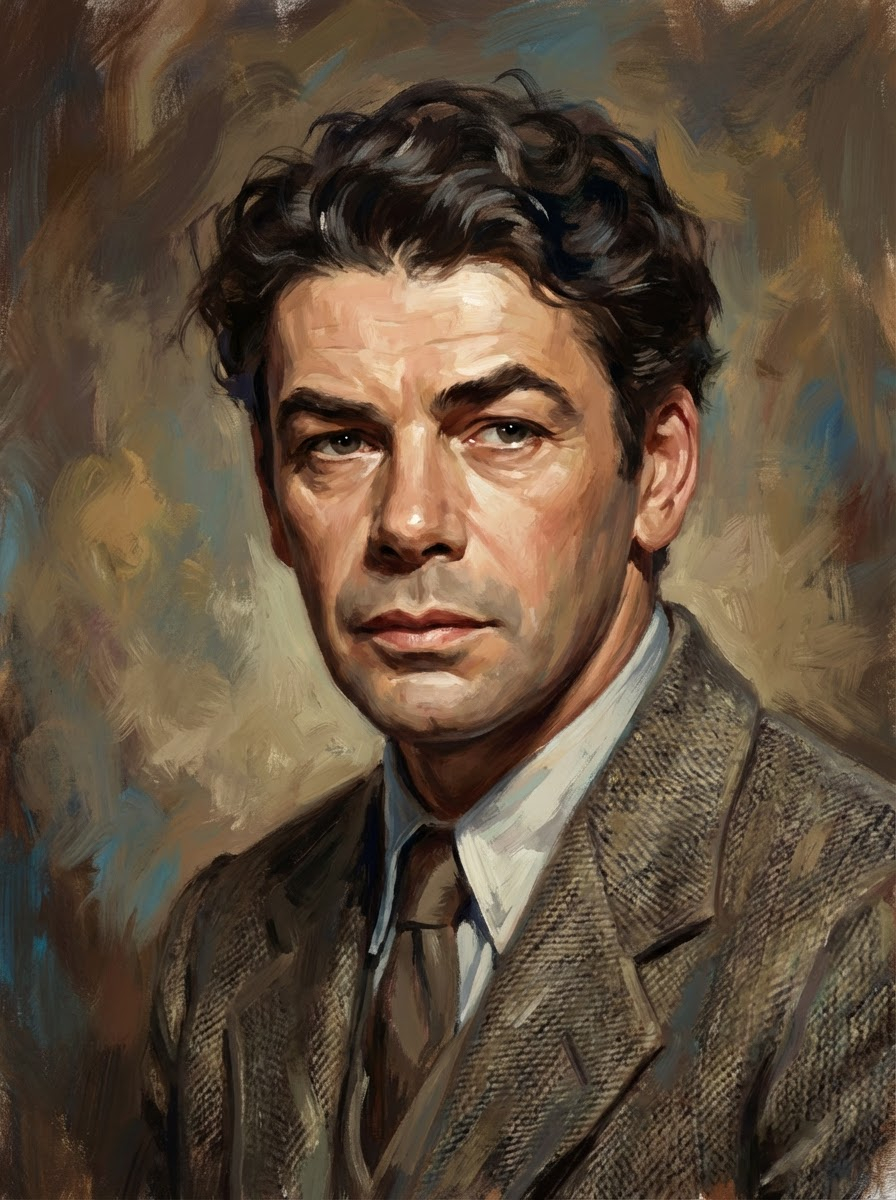
Portrait · Paul MuniBorn Meshilem Meier Weisenfreund on September 22, 1895, in Lemberg, Galicia (now Lviv, Ukraine) — the son of itinerant Yiddish theatre performers, brought to America as a child, performing on the Yiddish stage in New York from the age of twelve. He spent two decades in Yiddish theatre before Broadway, developing a technique of total physical and vocal transformation that would define his Hollywood career: the actor who arrived at the studio in a different body for each film.
Howard Hawks's Scarface (1932) — Muni as Tony Camonte, the Chicago gangster modelled on Al Capone — introduced him to film audiences and demonstrated the range immediately: the immigrant's accent, the physical swagger, the specific violence that was not performed but inhabited. The film established him as a star on terms he found acceptable. He negotiated script approval and story control into every subsequent Warner Bros. contract, making him the first actor to exercise substantial creative control over his own material.
William Dieterle's The Story of Louis Pasteur (1936) — Muni as the French bacteriologist — won him the Academy Award and inaugurated the Warner Bros. biographical film cycle that would continue with The Life of Emile Zola (1937, Oscar nomination) and Juarez (1939). These films — serious, historically grounded, intellectually engaged — defined Hollywood's prestige genre for the decade and established a template for the biographical film that the industry has returned to ever since.
He returned to Broadway after his Hollywood contract ended, winning the Tony Award for Best Actor for his performance in Inherit the Wind (1955). He made his final film appearance in The Last Angry Man (1959), for which he received his sixth Oscar nomination. He died on August 25, 1967, in Montecito, California, his eyesight largely gone in his final years but his reputation as the decade's most serious film actor intact.
Pasteur's quality — the scientist whose certainty precedes the evidence and who must wait for the evidence to catch up — is played by Muni with the specific patience of a man who knows he is right and has decided to outlast the opposition. The physical transformation was complete: the aging of the character across decades, the posture of a man bent over laboratory equipment for a career, the hands that had spent forty years in a laboratory — all built from observation rather than makeup.
Tony's quality — the immigrant's energy and ambition transposed into criminal violence, the American success story with the morality removed — is played by Muni with the specific physicality of a man who has built himself out of nothing and intends to keep what he has built. The coin-flipping — Tony's nervous habit throughout — is the kind of specific physical detail that Muni built his characters from: the gesture that tells you everything about the person before a word is spoken.
Zola's quality — the artist who finds that comfort has made him cautious and who recovers his courage in service of someone else's injustice — is played by Muni across a lifetime's arc, the aging again accomplished without prosthetics through posture and movement. The courtroom speech — Zola's defence of his letter to the President — is the film's set piece, played with the specific quality of a man who has decided that this is the moment and that the consequences are irrelevant.
Allen's quality — the decent man made criminal by the system that prosecuted him — is played by Muni with the specific deterioration of someone whose dignity is being taken piece by piece. The film's final image — Allen's face in darkness, the whispered "I steal" — is the most despairing ending in 1930s Hollywood cinema, played by Muni without softening or sentimentality: the system won, the man is destroyed, and the darkness is the film's honest answer.
An actor must interpret life, and in order to do so must be willing to accept all the experiences life has to offer.
Paul Muni's legacy is the biographical film and the total transformation — the genre he built with Dieterle at Warner Bros. in the 1930s and the method he used to build it. Six Oscar nominations, one win, a Tony Award, and the specific quality that meant audiences watching Scarface in 1932 and The Story of Louis Pasteur in 1936 had genuine difficulty believing it was the same person: the complete disappearance of the actor into the character.
The biographical film has never gone away — from Lawrence of Arabia to Gandhi to Ray to Bohemian Rhapsody, the form Muni established in Hollywood continues. The seriousness he demanded — script approval, historical research, physical transformation in service of the subject rather than the star — is the standard against which every subsequent biographical performance is measured, usually to the subsequent actor's detriment.