The Edinburgh milkman who became James Bond, escaped him through a decade of deliberate against-type choices, and won the Academy Award at fifty-seven for The Untouchables — the only man ever named People Magazine's Sexiest Man Alive and then, a decade later, Sexiest Man of the Century, who remained himself at every age and was knighted in the year before he retired.
Portrait · Sean ConneryBorn Thomas Sean Connery on August 25, 1930, in Edinburgh, Scotland — the son of a factory worker and a cleaning lady, raised in the Fountainbridge district, leaving school at thirteen to work as a milkman, then a labourer, a steelworker, a bricklayer, a lifeguard, a model, and a coffin polisher. He competed in the 1950 Mr. Universe contest as a bodybuilder, finishing third in the tall man category, and used the contacts to get work as a chorus boy in the touring production of South Pacific, which led to acting.
Cubby Broccoli and Harry Saltzman's Dr. No (1962) — Connery as James Bond, Ian Fleming's British intelligence officer — established the character and the persona simultaneously. Fleming had opposed the casting (he considered Connery too rough); the audiences and the subsequent half-century proved Fleming wrong. Six official Bond films between 1962 and 1967; then the departure that most actors would not have made: a decade of deliberate against-type choices designed to escape the character.
Brian De Palma's The Untouchables (1987) — Connery as Jim Malone, the Chicago beat cop who joins Eliot Ness's Prohibition-era task force — won him the Academy Award for Best Supporting Actor at fifty-seven. The Oscar was the public acknowledgment that the escape from Bond had succeeded; that the Edinburgh milkman who had been told he was too rough for the role of a fictional British spy had, in the intervening twenty-five years, become one of the most respected actors of his generation.
He retired from acting in 2006 after refusing the role of Gandalf in The Lord of the Rings (he said he didn't understand the script) and the role of the Architect in The Matrix sequels. He received a BAFTA Fellowship in 2006 and was knighted in 2000. He died on October 31, 2020, in Nassau, the Bahamas, aged ninety, in his sleep.
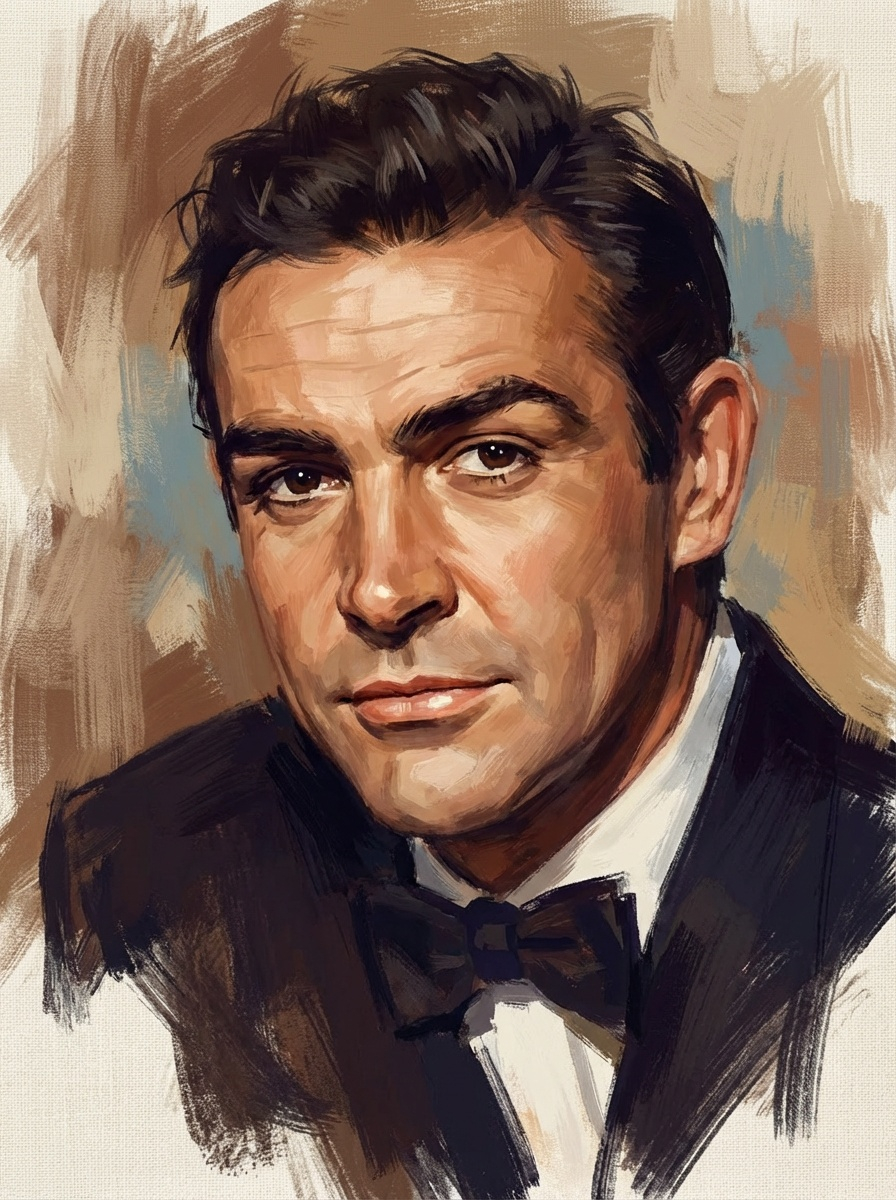
Malone's quality — the man who has seen enough of Chicago to know what fighting Capone will cost and who joins anyway because the alternative is worse — is played by Connery with the specific weight of someone whose age is an asset rather than a liability: the experience that has made him cautious and the courage that has made him act despite the caution. "Here endeth the lesson" — Malone's death scene — is played by Connery with a completeness that the Oscar recognised: the character dying as he lived, teaching Ness something about the price of what they are doing.
Bond's quality — the ease with danger, the specific irony that is never cynicism, the competence that never becomes arrogance — is established in Dr. No with the completeness that meant Connery could not be replaced without the replacement being defined by the comparison. "Bond. James Bond." — spoken to the camera across a gaming table in the first minute of the first film, delivered with the specific confidence of a man who has decided his name is sufficient introduction — is the most replicated self-introduction in cinema history.
Dravot's quality — the ambition that exceeds the man, the courage that becomes hubris, the specific tragedy of a man who achieves something impossible and then destroys it with the one decision that his ambition made inevitable — is played by Connery with the authority that Huston recognised as the rare thing: an actor whose physical presence and dramatic intelligence were equal to a genuinely large subject. The final scene — Dravot's death, which he meets with the specific equanimity of a man who always knew it would end this way — is the career's most complete dramatic moment before The Untouchables.
Henry Sr.'s quality — the absent father who is now present, whose obsession and whose love are inextricable, whose formality with his son is the specific formality of a man who does not know how to repair what his absence created — is played by Connery with the warmth that the Bond persona had never required. The father-son dynamic worked because Ford and Connery had the necessary quality: the mutual respect of two men who understood each other's instrument and found the working relationship produced something neither could have generated alone.
There is nothing like a challenge to bring out the best in a man.
Sean Connery's legacy is Bond and what he did after Bond — the persona that defined screen masculinity for a generation and the subsequent career that proved the persona was a role rather than the man. One Academy Award at fifty-seven; a BAFTA Fellowship; a knighthood in Highland dress; Sexiest Man of the Century at sixty-nine; and the Edinburgh accent in every performance for fifty years: the milkman who never left Fountainbridge, regardless of where the work took him.
"Bond. James Bond." — and then twenty-five years of refusing to trade on it, building instead a dramatic career of genuine seriousness that culminated in The Untouchables and produced an Oscar that Fleming, who had opposed his casting, did not live to see. The escape from Bond is the career's central achievement; the Bond itself is why the escape was necessary and why the achievement was extraordinary. He remained himself at every age, and what he was, was enough.