Milwaukee, Wisconsin · 1900 – 1967

SpencerTracy

The Milwaukee-born stage actor who won two consecutive Academy Awards — the only performer ever to do so — whom Katharine Hepburn loved for twenty-six years and described as the most natural actor alive, and whom Laurence Olivier called the finest screen actor he had ever seen; the man who made acting look so effortless that the effort was the art's most complete concealment.

2
Consecutive
Oscars Won
9
Total
Nominations
26
Years with
Katharine Hepburn
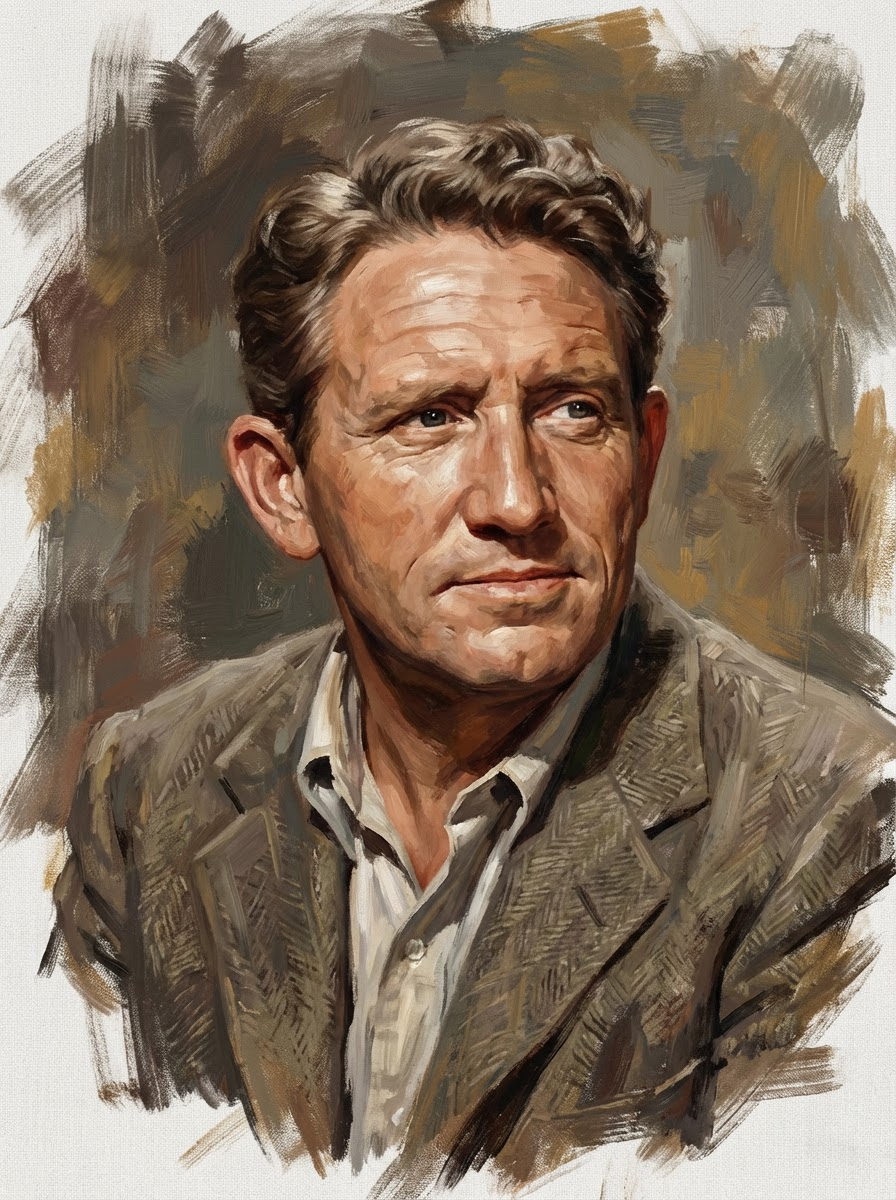
Spencer TracyPortrait · Spencer Tracy

From Milwaukee's Stage to Two Consecutive Oscars — The Only Ones

Born Spencer Bonaventure Tracy on April 5, 1900, in Milwaukee, Wisconsin — the son of a truck salesman and a schoolteacher, a restless student who attended Ripon College with the intention of becoming a priest, changed course, transferred to the American Academy of Dramatic Arts, and established himself in New York stage productions throughout the 1920s. He arrived in Hollywood in 1930, spent three difficult years at Fox, and was released from his contract — a decision Fox would later describe as its greatest error.

At MGM from 1935, director Victor Fleming's Captains Courageous (1937) — Tracy as the Portuguese fisherman Manuel who rescues a spoiled rich boy from drowning and teaches him what work and dignity mean — won him the first Academy Award for Best Actor. The following year, Norman Taurog's Boys Town (1938) — Tracy as Father Edward Flanagan, the priest who founded the Boys Town orphanage in Nebraska — won him the second. Two consecutive wins; the only time in the Academy's history; and the third consecutive year in which he had been nominated.

The partnership with Katharine Hepburn — nine films between 1942 and 1967, and a private relationship of twenty-six years that both acknowledged and that ended only with his death — is the most creatively productive and personally sustained collaboration in Hollywood history. He died on June 10, 1967, seventeen days after completing Guess Who's Coming to Dinner — Hepburn's final scene with him in that film, and his last — and she wept, she said, during every subsequent viewing of the footage.

He was Catholic, remained technically married to his wife Louise throughout his life (he would not divorce on religious grounds), a serious alcoholic for much of his career, and privately tormented. Hepburn understood these things and stayed. His ninth nomination, for Guess Who's Coming to Dinner, came posthumously.
1900
Born Milwaukee; considered priesthood; AADA; New York stage throughout the 1920s
1930
Hollywood; Fox contract; three difficult years; released; MGM's greatest acquisition
1937
Captains Courageous — Manuel; first consecutive Oscar; the standard established
1938
Boys Town — Father Flanagan; second consecutive Oscar; the only time ever
1942
First film with Hepburn — Woman of the Year; twenty-six years begin
1961
Judgment at Nuremberg — Judge Haywood; Stanley Kramer; Olivier acknowledges him
1967
Dies seventeen days after finishing Guess Who's Coming to Dinner; Hepburn stays

From Manuel's Fishing Boat to Nuremberg's Bench

1937Drama · Victor Fleming · Freddie Bartholomew · Lionel Barrymore
Captains Courageous
Victor Fleming's sea adventure — Tracy as Manuel, the Portuguese fisherman who rescues Harvey Cheyne (Bartholomew) when the spoiled rich boy falls overboard from a luxury liner, and who teaches him over the course of the fishing season what honest work and human dignity look like. The first Oscar; a role that required a Portuguese accent, a physical transformation, and the specific warmth of a man whose life has given him everything the boy's money has denied him.
Oscar Won

Manuel's quality — the working man's joy in his work, the dignity that comes from competence and community rather than wealth — is played by Tracy with the ease that was already his signature: the natural quality that concealed the preparation, the warmth that was not performance but presence. Manuel's death — and Harvey's grief over it — is the film's emotional climax, played by Bartholomew against Tracy's stillness with the specific asymmetry of a child actor who has been given everything he needs by the adult beside him.

1961Courtroom Drama · Stanley Kramer · Maximilian Schell · Burt Lancaster · Judy Garland
Judgment at Nuremberg
Stanley Kramer's Nuremberg trials drama — Tracy as Judge Dan Haywood, the American judge assigned to the second Nuremberg trial (the judges' trial), weighing whether German jurists who enforced Nazi law are guilty of crimes against humanity. The film's moral argument — about complicity, about the relationship between legal duty and moral responsibility — runs entirely through Haywood's face as he listens, considers, and decides. Oscar nomination; Olivier's acknowledgment; the most restrained performance in the most demanding context.
Oscar Nom

Haywood's quality — the jurist who must weigh the evidence with the impartiality the role demands while the evidence he is weighing involves the destruction of human beings — is played by Tracy with the specific quality that made Olivier use the word "finest": the interiority completely present on screen without a single externalising gesture. The final scene — Haywood visiting the convicted Ernst Janning in his cell — is the film's moral resolution: two men in a small room, one of whom has judged the other, discovering what the judgment does and does not settle.

1955Drama · John Sturges · Robert Ryan
Bad Day at Black Rock
John Sturges's postwar western-thriller — Tracy as John J. Macreedy, the one-armed veteran who arrives in a small desert town on a single day's mission and gradually uncovers the wartime murder the town has been concealing. Lean, physical, morally certain: the performance that demonstrated the range included the thriller and the western alongside the court dramas and the biographies, and that the one arm — built into the performance with the specific physicality of someone who had prepared — was not a limitation but an argument.
Oscar Nom

Macreedy's quality — the veteran whose war experience has given him a specific relationship to injustice that the small-town conspiracy cannot contain — is played by Tracy with the physical specificity the role demanded: the one-armed man who fights with a judo technique he has developed to compensate, the veteran who is tired rather than heroic but whose tiredness is a form of determination. The film's compression — one day, one town, one mission — suits Tracy's economy: the character who does not say more than the situation requires, and says it with the exactness that makes every word necessary.

1942Romantic Comedy · George Stevens · Katharine Hepburn
Woman of the Year
George Stevens's newsroom romantic comedy — Tracy as Sam Craig, the sports reporter whose relationship with the internationally celebrated political columnist Tess Harding (Hepburn) tests both of their assumptions about what a marriage requires and who gets to have a career. The first Tracy-Hepburn collaboration; the film that established the partnership; and the specific chemistry — the mutual respect of equals, the comedy of two people who are both right and both wrong — that nine films would develop.

Sam's quality — the man secure enough in himself to be funny about his own displacement, confident enough to find a woman's ambition attractive rather than threatening — is played by Tracy with the specific ease of someone who has understood that the comedy is in the situation rather than in the mugging. The Tracy-Hepburn dynamic — established in this film and refined across the subsequent eight — is the screen's most complete argument that the best partnerships are between equals: Sam's lack of pretension meeting Tess's pretension, each puncturing the other's excess, each finding in the other's resistance the reason to stay.

"

Know your lines and don't bump into the furniture.

— Spencer Tracy (on acting)

Nine Nominations — Two Consecutive Wins — The Only Time Ever

Academy Award — Best Actor
1938 + 1939
Captains Courageous · Boys Town
Two consecutive Academy Awards — Captains Courageous (1938) and Boys Town (1939) — the only time any actor has won the award in back-to-back years. The Academy attempted to give him the second award in absentia and he declined; he attended the ceremony and received it in person. The double win is the most extraordinary statistical fact in acting Oscar history and it has not been repeated in the eighty-five years since.
The Only Consecutive Wins
Nine Oscar Nominations
1936 – 1968
Three Decades of Recognition
Nine nominations across thirty-two years — San Francisco (1937), Captains Courageous (1938, won), Boys Town (1939, won), Father of the Bride (1951), Bad Day at Black Rock (1956), The Old Man and the Sea (1959), Inherit the Wind (1961), Judgment at Nuremberg (1962), Guess Who's Coming to Dinner (1968, posthumous). The range reflects the range: the fisherman, the priest, the father, the veteran, the fisherman again, the lawyer, the judge, and the father again.
Nine Nominations
Olivier's Assessment
Various
"The Finest Film Actor"
Laurence Olivier — widely considered the finest stage actor of the twentieth century — called Spencer Tracy the finest film actor he had ever seen. The assessment is significant because Olivier understood the distinction between stage and screen acting, and the specific demands that the camera makes that the stage does not: the interiority, the economy, the naturalness that Tracy possessed to a degree no contemporary matched.
Olivier's Verdict
The Hepburn Partnership
1942 – 1967
Nine Films · Twenty-Six Years
Nine films with Katharine Hepburn across twenty-five years; a private relationship of twenty-six years that both acknowledged; and Hepburn's presence at his bedside when he died seventeen days after completing their final film together. She described him as the most natural actor alive and said she cried during every subsequent viewing of their last scene together. The partnership is the most sustained creative and personal collaboration in Hollywood history.
Nine Films · 26 Years

The Naturalness — The Consecutive Oscars — Kate

The Naturalness
The naturalness — the quality Hepburn described and Olivier recognised — was not the absence of technique but its complete concealment. Tracy prepared thoroughly and showed nothing of the preparation; the characters arrived fully inhabited, without the seams showing. The advice attributed to him — know your lines and don't bump into the furniture — is the self-deprecating joke of someone whose technique was too complete to need defending.
The Consecutive Oscars
1938 and 1939 — the only consecutive wins in Academy history, and eighty-five years on, still unmatched. The double win was not for the same quality twice; Captains Courageous required physical transformation and a Portuguese accent, Boys Town required the specific quality of the celibate priest whose love is directed at children in need. Two entirely different instruments, both at maximum specification, in consecutive years.
The Hepburn Years
Twenty-six years — nine films, a private relationship, and a partnership of equals whose dynamic the films never tired of exploring. The Tracy-Hepburn chemistry worked because both had the specific quality of being fully present without being demonstrative; the films gave them situations in which their mutual respect was tested, and the respect survived every test. It survived until his death.
The Private Torment
The alcoholism, the Catholicism that prevented divorce, the son's deafness (which Tracy blamed on himself), the guilt that the religion required — the private torment was real and sustained throughout the career. Hepburn knew about it and stayed. The performances contain none of it explicitly and all of it implicitly: the specific gravity that made the naturalness more than merely pleasant was the weight of a man who was carrying something the audience never fully saw.

Manuel's Song — Haywood's Verdict — Kate's Twenty-Six Years

Spencer Tracy's legacy is the standard — the naturalness that Olivier recognised and Hepburn described, applied to nine consecutive Oscar nominations across thirty years, producing two consecutive wins that no one has matched since. The fisherman, the priest, the judge, the father, the veteran: five entirely different people, all played with the same quality — the interiority completely present, the technique completely concealed, the effort the art's most perfect concealment.

He died seventeen days after finishing his last scene with Katharine Hepburn, who had loved him for twenty-six years and who wept when she watched the footage. The advice — know your lines and don't bump into the furniture — is the joke. The nine nominations and two consecutive wins are the answer. Olivier's "finest film actor he had ever seen" is the assessment that has stood longest, because Olivier understood the difference between performing naturalness and possessing it, and recognised that Tracy possessed it completely.

Consecutive Oscar Wins
1938 + 1939 — the only time ever
2
Total Oscar Nominations
1937 to 1968
9
Films with Katharine Hepburn
1942 to 1967
9
Days After Last Film to Death
Guess Who's Coming to Dinner, 1967
17