Malibu, California · Born 1960

TimothyHutton

The Malibu-born son of actor Jim Hutton, who won the Academy Award for Best Supporting Actor at twenty — the youngest winner of that award in Academy history — as Conrad Jarrett in Ordinary People, and who followed it with Daniel Hirsch in Sidney Lumet's Daniel, and Christopher Boyce, the Falcon, in John Schlesinger's The Falcon and the Snowman; a career of deliberate, serious choices that has never stopped finding the difficult material.

20
Age When
Oscar Won
1
Oscar Won
Best Supporting
60+
Film & TV
Credits
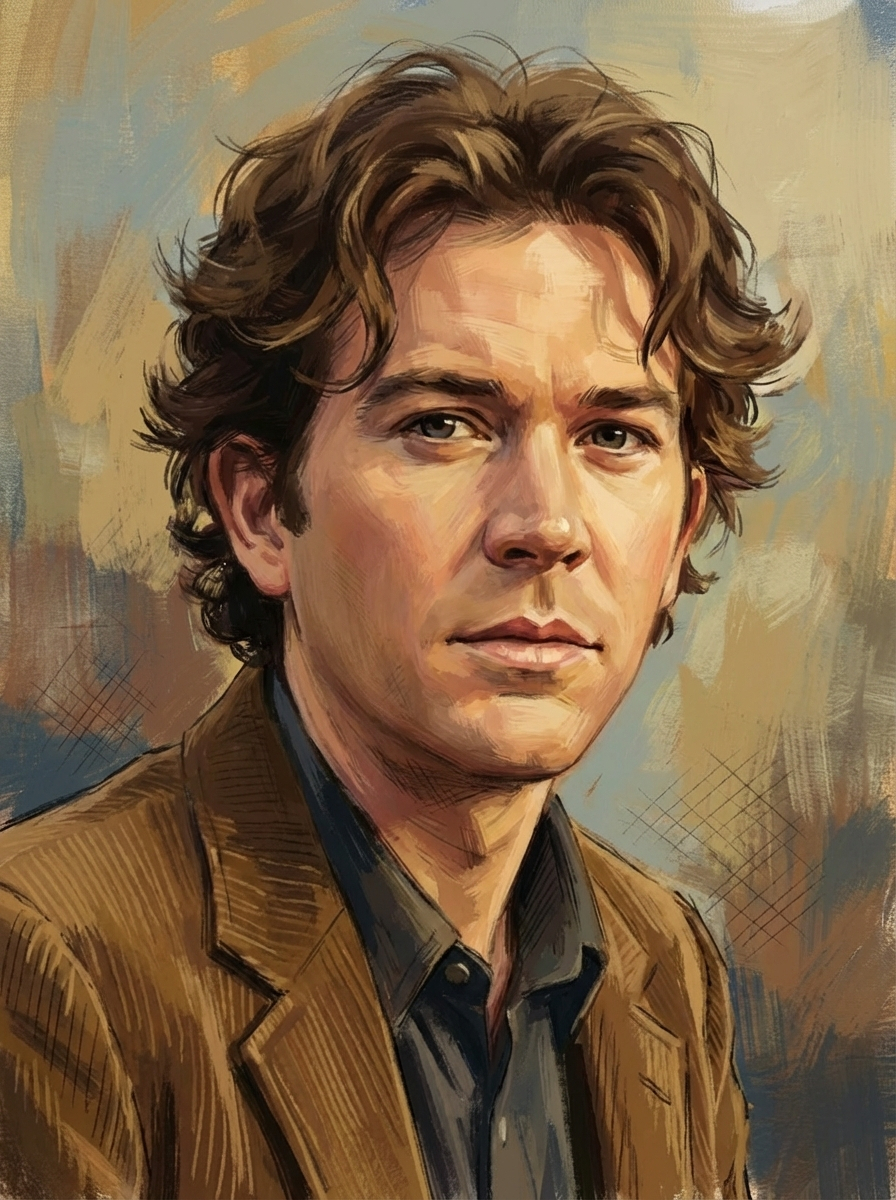
Timothy HuttonPortrait · Timothy Hutton

From Conrad's Guilt to The Falcon's Betrayal

Born Timothy James Hutton on August 16, 1960, in Malibu, California — the son of the actor Jim Hutton (The Horizontal Lieutenant, Where the Boys Are, Ellery Queen) and Maryline Adams. His parents divorced when he was three; he was raised by his mother in California while maintaining a relationship with his father, who died of liver cancer in 1979, the year before Timothy's breakthrough. The loss is biographical context for what Conrad Jarrett would require.

Robert Redford's Ordinary People (1980) — Hutton as Conrad Jarrett, the teenager whose older brother Buck drowned in a boating accident that Conrad survived, and whose survivor guilt and depression are the film's subject — won him the Academy Award for Best Supporting Actor at the age of twenty years and two months. He remains the youngest recipient of that award in the Academy's history. The performance required him to inhabit a grief that was not remote from his own recent experience, and the result — the therapy scenes with Judd Hirsch, the pool scene, the final reconciliation with Donald Sutherland — is fully and entirely inhabited.

Sidney Lumet's Daniel (1983) — Hutton as Daniel Isaacson, the son of parents executed for espionage in a thinly fictionalised account of the Rosenberg case, E.L. Doctorow's novel adapted by Doctorow himself — demonstrated the range immediately after the Oscar: the adult survivor navigating the weight of his parents' politics and death, played with the specific complexity of someone processing history that has not yet resolved into narrative.

John Schlesinger's The Falcon and the Snowman (1985) — Hutton as Christopher Boyce, the young California man who sold CIA secrets to the Soviet Union alongside his drug-dealer friend Daulton Lee (Sean Penn), the real-life spy case whose trial had ended in 1977 — is the cold-war spy film that used the California counterculture context to make the espionage comprehensible: not ideology but disillusionment, not conviction but drift. The Falcon opposite Penn's Snowman is the film's engine; the two performances are the career's most complete double portrait.
1960
Born Malibu; son of Jim Hutton; parents divorce; raised in California
1979
Father Jim Hutton dies of liver cancer; loss that will inform Conrad Jarrett
1980
Ordinary People — Conrad Jarrett; Oscar won; youngest Best Supporting Actor ever
1983
Daniel — Lumet; Doctorow; Daniel Hirsch; the range confirmed immediately
1985
The Falcon and the Snowman — Boyce; Schlesinger; Penn; the Falcon
2001
Leverage (TV series) — Nathan Ford; five seasons; the television career sustained
Present
Still working; still finding the difficult material; sixty-plus credits and counting

From Conrad's Therapy Session to Boyce's Trial

1980Drama · Robert Redford · Donald Sutherland · Mary Tyler Moore · Judd Hirsch
Ordinary People
Robert Redford's directorial debut — Hutton as Conrad Jarrett, the Chicago teenager whose survival of the boating accident that killed his older brother Buck has left him with survivor guilt, clinical depression, and a fractured relationship with a mother (Mary Tyler Moore) who cannot grieve. Best Picture; Best Director; Hutton's Oscar at twenty; and the therapy scenes with Judd Hirsch's Dr. Berger that required the twenty-year-old actor to sustain the kind of emotional work that most actors spend years developing.
Oscar Won · Age 20

Conrad's quality — the grief that has been legislated out of the family by a mother who copes through control, and that finally finds language in the therapist's office — is played by Hutton with the specific vulnerability of someone who had recently lost his own father and who understood, at twenty, what it means to carry loss in a body that the people around you want to see recovering. The scene in which Conrad calls Dr. Berger in the middle of the night — the breakdown that is also the breakthrough, played by Hutton at full intensity in a single take that Redford kept — is the film's emotional hinge and the Oscar's specific justification.

1983Political Drama · Sidney Lumet · E.L. Doctorow · Mandy Patinkin
Daniel
Sidney Lumet's adaptation of E.L. Doctorow's novel about the Rosenberg case — Hutton as Daniel Isaacson, the adult son of executed communist spies, navigating the weight of his parents' politics, their trial, their execution, and his own inability to resolve any of it into a stable identity. Doctorow's screenplay; Lumet's specific intelligence about justice and injustice; and the performance that demonstrated the Oscar had not been a lucky accident but the first confirmation of a serious instrument.

Daniel's quality — the man whose entire identity has been formed by an event he did not choose and cannot escape, who must inhabit simultaneously the child he was when his parents died and the adult he has become in response to that death — is played by Hutton with the structural complexity the character requires: the past and present tenses of the same life, held at equal weight. The film's structure — Daniel's non-linear navigation of the material — mirrors the character's navigation, and Hutton holds the disorientation without losing the emotional throughline: the grief that has nowhere to go and the politics that have nowhere to be resolved.

1985Cold War Thriller · John Schlesinger · Sean Penn · Pat Hingle
The Falcon and the Snowman
John Schlesinger's cold war espionage drama — Hutton as Christopher Boyce, the young California man who works in a CIA black communications vault and who, disillusioned by what he sees, sells intelligence to the Soviet Union alongside his childhood friend Daulton Lee (Penn). Based on the actual espionage case of Boyce and Lee, tried in 1977. The Falcon opposite Penn's chaotic Snowman; the straight man and the loose cannon; and the performance that showed the range included the cool, contained, gradually dissolving moral certainty of a specific kind of American idealism.

Boyce's quality — the idealist who drifts into treason not from conviction but from disillusionment, whose cool is the performance of someone who has decided that the decision has already been made — is played by Hutton as the film's structural anchor opposite Penn's kinetic Daulton. The courtroom scenes — Boyce's trial, his composure under examination, the specific quality of a man who has accepted what he is about to receive — are the performance's most quietly devastating passages: the Falcon at rest, having flown as far as the tether allows.

2008 – 2012Television Series · Dean Devlin · TNT Network
Leverage
Dean Devlin's heist television series — Hutton as Nathan Ford, the insurance investigator turned con artist who leads a team of specialists who steal from the powerful on behalf of the powerless. Five seasons, eighty-nine episodes, and the television career that demonstrated the instrument's facility with extended character work: the alcoholic, the morally complicated, the man whose competence is also his wound, sustained across five years of weekly storytelling.

Nate's quality — the investigator who crosses the line he used to guard and finds himself good at the other side, the morality organised around the specific injustice that motivated the crossing — is played by Hutton with the dry comedy and the sustained damage that the long-form television format demands and rewards. The series gave Hutton the opportunity to develop a character across five years rather than two hours, and the development is visible: the Nate of Season Five carries the accumulated weight of what the Nate of Season One could only anticipate.

"

I never wanted to be the biggest star in the world. I wanted to work with the best people and do the best material.

— Timothy Hutton

Youngest Best Supporting Actor — The Record That Stands

Academy Award — Best Supporting Actor
1981
Ordinary People
Won at twenty years and two months — the youngest Best Supporting Actor winner in Academy history, a record that has stood for more than forty years and shows no sign of being broken. The win was for Conrad Jarrett: the therapy sessions, the pool scene, the midnight phone call to Dr. Berger, the final scene with Sutherland's Calvin. The Academy recognised something complete in the performance; the completeness was the work of a twenty-year-old who had recently lost his own father.
Youngest in History
Golden Globe — Best Actor (Drama Series)
2009
Leverage
Golden Globe for Leverage's Nathan Ford — the television career's formal recognition, confirming that the instrument developed in Ordinary People and Daniel and The Falcon and the Snowman had not diminished in the intervening three decades but had found a new form in extended television storytelling. The Globe was for a character of genuine complexity played across a long run with the consistency that only sustained work produces.
Golden Globe Won
The Lumet Collaboration
1983
Daniel
Sidney Lumet — the director of 12 Angry Men, Serpico, Network, and Dog Day Afternoon — chose Hutton for Daniel immediately after Ordinary People, recognising the instrument's capacity for the political and moral complexity that Lumet's films required. The collaboration produced Daniel, one of the most demanding political films of the decade, and confirmed the post-Oscar trajectory: toward the serious, the difficult, the materially complex.
Lumet's Trust
Jim Hutton's Son
1960 – 1979
The Foundation
The son of Jim Hutton — the television and film actor whose career ran from 1960 to his death in 1979 — Timothy grew up in the industry without the industry being the whole of his world. His father's death the year before Ordinary People is the biographical fact that the Conrad Jarrett performance cannot be separated from: the grief that informed the work was not invented, and the twenty-year-old who performed it was carrying it in real time.
Jim Hutton's Legacy

Conrad's Grief — Daniel's History — The Falcon's Drift

The Early Record
Youngest Best Supporting Actor in Academy history — won at twenty, a record that has stood since 1981. The youth was not an accident of the role but the role's specific requirement: Conrad Jarrett is a teenager, and the performance needed someone who understood at a cellular level what it meant to be that age and carry that weight. The record is the proof of the specificity.
The Father's Loss
Jim Hutton died of liver cancer in 1979, the year before Ordinary People. Timothy's performance as Conrad — the boy carrying survivor guilt after his brother's death, in a family where grief has been banned — carries the biographical context without advertising it. The grief that Conrad cannot express is not entirely invented; the twenty-year-old who plays it is not entirely acting. The loss is the foundation, the performance is the form it found.
The Serious Material
Ordinary People, Daniel, The Falcon and the Snowman, Taps, Turk 182, Made in Heaven — the career choices after the Oscar were consistently toward the serious, the politically engaged, the materially complex. The commercial choices were available; they were not the choices made. The career of deliberate seriousness is the Oscar's most accurate legacy: the instrument built for the work rather than for the fame.
The Television Career
Leverage across five seasons and eighty-nine episodes; American Crime across two seasons; Mindhunter; City on a Hill — the television career that extended the film career's trajectory into longer form storytelling, sustaining the instrument across the formats that the twenty-first century made primary. The Nathan Ford of Leverage is not smaller than Conrad Jarrett; he is the same instrument in a different room.

Conrad's Phone Call — Daniel's Time — Boyce's Sentence

Timothy Hutton's legacy is the youngest — the youngest Best Supporting Actor winner in Academy history, a record that has stood for more than forty years, won for a performance of grief at twenty by a twenty-year-old who was carrying grief of his own. Conrad Jarrett in Ordinary People, Daniel Hirsch in Daniel, Christopher Boyce in The Falcon and the Snowman — three performances in five years that established the instrument's range and its consistent preference: the serious material, the morally complex character, the historical or political context.

He is still working. Leverage ran for five seasons; American Crime and Mindhunter and City on a Hill and dozens of other credits have followed; the sixty-plus films and television roles are the evidence that the instrument built at twenty has sustained its seriousness across four decades of choice. The record is the youngest; the career is the proof that youngest was not an aberration but the first measurement of something that has not stopped being measured since.

Age at Oscar Win
Youngest Best Supporting Actor in history
20
Record Standing Since
1981 — has not been broken
44+ yrs
Leverage Episodes
Nathan Ford, TNT, 2008–2012
89
Film & TV Credits
And still counting
60+