Richmond, Virginia · Born 1937

WarrenBeatty

The Richmond, Virginia actor who produced, directed, wrote, and starred in Reds — the three-hour epic about the American radical John Reed, nominated for twelve Oscars and winning three including Best Director — who transformed the American independent film with Bonnie and Clyde, and who was handed the wrong envelope at the 2017 Oscars, producing the most famous mistake in Academy history.

14
Oscar
Nominations
1
Oscar Won
(Directing)
2017
The Wrong
Envelope
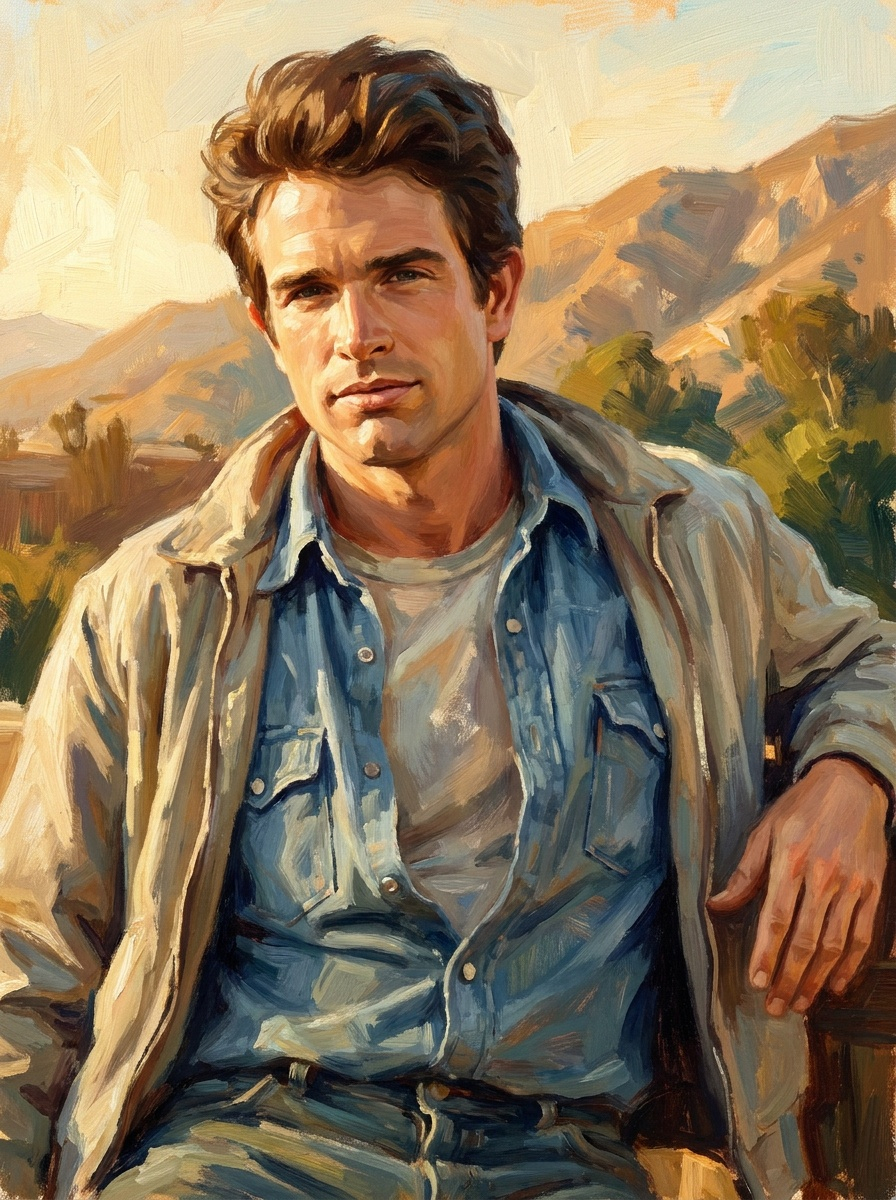
Warren BeattyPortrait · Warren Beatty

From Splendor in the Grass to John Reed's Revolution

Born Henry Warren Beaty on March 30, 1937, in Richmond, Virginia — the younger sibling of Shirley MacLaine, the son of an educator and a drama teacher. He attended Northwestern University on a football scholarship, dropped out to pursue acting in New York, and established himself on Broadway before Elia Kazan cast him in Splendor in the Grass (1961) opposite Natalie Wood, which made him a star immediately.

Arthur Penn's Bonnie and Clyde (1967) — Beatty producing and starring as Clyde Barrow, opposite Faye Dunaway's Bonnie Parker — is the film that changed American cinema. Not the most celebrated description of its effect, but the most accurate: the French New Wave influences, the graphic violence, the moral ambiguity, the box office that proved the studio system's assumptions about what audiences wanted were wrong — Bonnie and Clyde was the opening of the New Hollywood, and Beatty had produced it.

His magnum opus — Reds (1981) — which he produced, directed, co-wrote, and starred in as John Reed, the American radical journalist who witnessed and documented the Russian Revolution, is the most ambitious personal project in the American cinema of its era: a three-hour epic with newsreel footage of real historical witnesses, nominated for twelve Academy Awards, winning three including Best Director. The film took fifteen years of development, considerable personal investment, and the complete commitment of someone who understood that the opportunity to make it might not come again.

At the 2017 Academy Awards, Beatty and Faye Dunaway were handed the wrong envelope and announced La La Land as Best Picture when the winner was Moonlight — the most famous mistake in Oscar history. Beatty looked at the card twice, showed it to Dunaway, and she announced the wrong film; the error was caught and corrected on live television. He married actress Annette Bening in 1992; they have four children.
1937
Born Richmond; Shirley MacLaine's brother; Northwestern; Broadway; Kazan
1961
Splendor in the Grass — Kazan; Natalie Wood; the star immediately established
1967
Bonnie and Clyde — produced; starred; changed American cinema; New Hollywood opens
1975
Shampoo — produced; wrote; starred; Ashby; Towne; the political satire
1981
Reds — produced, directed, wrote, starred; twelve nominations; Best Director won
1990
Dick Tracy — produced, directed, starred; the technical achievement; the entertainment
2017
The wrong envelope — La La Land announced; Moonlight won; live television

From Clyde Barrow's Car to John Reed's Revolution

1981Political Epic · Warren Beatty · Diane Keaton · Jack Nicholson
Reds
Beatty's self-produced, self-directed, self-written, self-starring political epic — as John Reed, the American journalist who witnessed the Russian Revolution and wrote Ten Days That Shook the World. Three hours; twelve Oscar nominations; three wins including Best Director; newsreel footage of real witnesses interviewed about Reed and his circle. The most ambitious personal project in American cinema of its era, made by a man who understood it might be his only opportunity to make something this large.
Oscar Won (Dir.)

Reed's quality — the idealism that is also vanity, the commitment that is also ambition, the political passion that is also personal drama — is played by Beatty with the specific intelligence of a man who spent fifteen years researching the subject and who understood what was attractive and what was deluded about his protagonist. The witness interviews — real historical figures, contemporaries of Reed, speaking directly to camera about what they remembered — are the film's structural argument: history is not what happened but what people remember about what happened, and the remembering is as important as the event.

1967Crime Drama · Arthur Penn · Faye Dunaway · Gene Hackman
Bonnie and Clyde
Arthur Penn's Depression-era crime film — Beatty as Clyde Barrow, produced by Beatty himself, the film that opened the New Hollywood period by demonstrating that American audiences would accept moral ambiguity, graphic violence, and French New Wave technique in a mainstream studio picture. The most consequential production decision of his career; the film that changed the industry; and the performance of a man who was simultaneously the movie's star and its architect.

Clyde's quality — the specific impotence that makes the violence compensatory, the charm that makes the impotence forgivable, the Depression-era aspiration that makes the crime comprehensible — is played by Beatty with the attention to psychological specificity that distinguishes the produced film from the starred film: the producer who had approved the script understood what the actor was playing. The final ambush — Bonnie and Clyde destroyed in slow motion — is the New Hollywood's founding image: beautiful and brutal, glamorous and horrifying, refusing to resolve the contradiction.

1975Political Comedy · Hal Ashby · Julie Christie · Jack Warden
Shampoo
Hal Ashby's Beverly Hills satire — Beatty as George Roundy, the hairdresser whose sexual availability to every woman in his social circle is the film's comic mechanism and its political metaphor, set on election eve 1968. Beatty produced and co-wrote with Robert Towne; the film is simultaneously the most commercially successful of the Beatty-Ashby-Towne collaborations and the most politically pointed — the hairdresser as the American male, servicing everyone and committing to no one, on the night Nixon won.

George's quality — the charm that has become a substitute for character, the attractiveness that has made genuine choice unnecessary — is played by Beatty with the specific self-awareness of someone who understood that the role was being played against his own public image. The election night party — George moving between his various relationships as the television announces Nixon's victory — is the film's set piece: the personal and the political at the same scale, the private disorder and the public disorder as the same disorder.

1990Comic Strip Noir · Warren Beatty · Madonna · Al Pacino
Dick Tracy
Beatty's second directorial feature — himself as Chester Gould's comic strip detective, in a production designed entirely in the seven colours permitted by the original comic strip's printing process. The visual achievement — the seven-colour world, the grotesque villains, the expressionist sets — is the film's argument; the entertainment is the delivery mechanism. Nominated for seven Oscars; three wins including Best Original Song. The director's eye, demonstrated in a completely different register from Reds.

Dick Tracy's quality — the incorruptible detective in a world of absolute corruption, the straight line in a curved world — is played by Beatty with the specific blankness that the comic strip required: the hero as structural necessity rather than psychological complexity. The seven-colour design — everything in the frame either primary-colour bold or black and shadow — is the direction's most complete expression: a world in which moral categories are as absolute as the palette, and the film's pleasure is in the decorative elaboration of the simplicity.

"

You've achieved success in your field when you don't know whether what you're doing is work or play.

— Warren Beatty

Fourteen Nominations — One Win — The Wrong Envelope

Academy Award — Best Director
1982
Reds
Won Best Director for Reds — the film he had spent fifteen years developing, that he had produced, co-written, and starred in, that had required the complete commitment of his career's resources and reputation. The Oscar acknowledged both the ambition and the execution: the three-hour political epic about the American radical who witnessed the Russian Revolution, told with newsreel witnesses and studio craft in equal measure.
Oscar Won
14 Oscar Nominations
1968 – 2000
Across Six Decades
Fourteen Academy Award nominations across six decades — the most of any individual whose primary career has been as producer, director, writer, and actor. The nominations span categories: producing, directing, writing, and acting, reflecting the career's refusal to settle into a single function. Bonnie and Clyde, Reds (four nominations in one year, as producer, director, writer, and actor), Bugsy, Bulworth — each nomination a different function in the same project.
14 Nominations
The Irving G. Thalberg Award
2000
Lifetime Achievement in Producing
The Irving G. Thalberg Memorial Award — the Academy's highest honour for producers — awarded in 2000 for a career in which the producing function was as important as the acting function, and in which the two were inseparable. Bonnie and Clyde, Shampoo, Reds, Dick Tracy, Bugsy — the producing credits are as significant as the acting credits, and the Thalberg acknowledged what the acting nominations had obscured.
Thalberg Award
The Wrong Envelope
2017
The Most Famous Oscar Mistake
Handed the wrong envelope at the 2017 ceremony — the Best Actress card rather than the Best Picture card — Beatty looked at it twice, showed it to Dunaway, who announced La La Land. The error was caught on live television when the La La Land producers were mid-speech. The Price Waterhouse accountant responsible was reassigned. The ceremony's final fifteen minutes are the most-watched sequence in Oscar history. Beatty handled it with the specific dignity of someone who had nothing to apologise for.
2017 — Live Television

The Hyphenate — The Perfectionism — The Legendary Deliberation

The Hyphenate
Producer-director-writer-actor — in Reds, all four at once, on a three-hour political epic. The hyphenate career is the career's central achievement: the refusal to be merely the star, the insistence on controlling the material at every level, the understanding that the most important decisions are made before the camera rolls. Bonnie and Clyde, Shampoo, Reds, Dick Tracy, Bugsy, Bulworth — produced by Beatty; the producing is the career's spine.
The Perfectionism
The legendary deliberateness — the fifteen years of Reds development, the decade between films, the roles refused (The Graduate, Butch Cassidy, The Godfather) — is the perfectionism's public expression. The roles refused are as significant as the roles taken; each refusal is a statement about what the career was for. The films made slowly and carefully are the argument against the films made quickly and commercially.
The Political Engagement
Reds — the three-hour political epic about the American radical who witnessed the Russian Revolution, made in 1981 as Ronald Reagan took office — is the most politically engaged film in the American mainstream cinema of its decade. Shampoo's Nixon election night. Bulworth's rap-politician satire of campaign finance. The political intelligence was always present; Reds gave it the largest possible canvas.
The MacLaine Sibling
The younger sibling of Shirley MacLaine — a detail of biographical coincidence that has never lost its capacity to surprise. Two siblings, both film stars, both of exceptional longevity, both with careers of genuine artistic ambition. MacLaine's career is defined by the performances; Beatty's by the productions. The same family; two entirely different theories of what the work is for.

Clyde's Ambush — Reed's Revolution — The Envelope That Changed Nothing

Warren Beatty's legacy is Bonnie and Clyde and Reds — the film that opened the New Hollywood and the film that was its most ambitious personal statement. Fourteen Oscar nominations, one win for directing, the Thalberg Award for producing, and the specific achievement of having produced, directed, written, and starred in a three-hour political epic about the Russian Revolution that was nominated for twelve Academy Awards and that the American studio system financed and distributed.

The wrong envelope is the anecdote; the films are the argument. Bonnie and Clyde is still the New Hollywood's founding document; Reds is still the most ambitious American political film of the 1980s; Shampoo is still the most pointed satire of the Nixon election; and the career behind them all is the evidence that the most beautiful man in Hollywood's most important rooms was also, and always, the smartest person in them.

Oscar Nominations Total
Across producer, director, writer, actor
14
Oscar Won
Best Director, Reds, 1982
1
Years Developing Reds
Before production began
15
Reds Running Time
The most ambitious American epic of its era
3h+